Louisiana T-Bone Accident Lawyers | Intersection Crash Attorneys
T-bone accidents at Louisiana intersections cause devastating side-impact injuries. The driver who ran the light won't admit it. We build the evidence that proves it.
$3M+
Recovered in serious intersection crashes
72hrs
Critical window to secure camera footage
No Fees
Unless we recover compensation for you
Win your case
Contact a Cossee Attorney to Take Control of Your Case
What Makes T-Bone Accidents at Louisiana Intersections So Dangerous
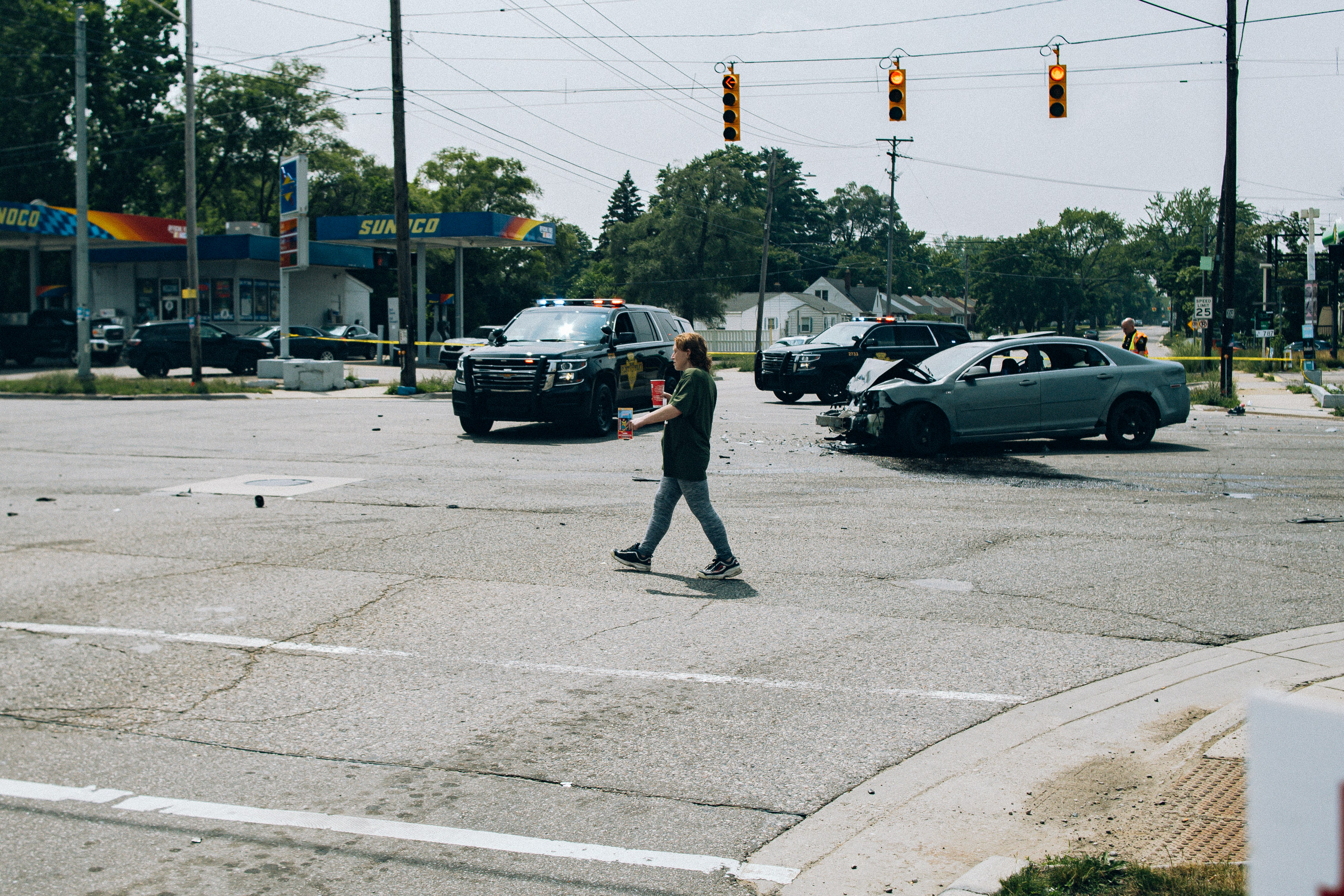
T-bone accidents occur when the front of one vehicle strikes the side of another at or near a right angle — one of the most dangerous crash configurations in passenger vehicle collisions. Door structures offer dramatically less occupant protection than front or rear crumple zones, meaning that even moderate-force lateral impacts can produce catastrophic injuries to the driver or passenger on the struck side.
These crashes most commonly occur at Louisiana intersections when one driver fails to yield the right of way, runs a red light or stop sign, or makes an improper left turn. The challenge in T-bone cases is that liability is frequently disputed because both drivers typically claim the green light or the right of way.
The Race Against Time for T-Bone Accident Evidence
Resolving a disputed T-bone liability dispute requires the evidence that exists at the intersection — surveillance cameras, traffic signal timing records, vehicle position evidence, and eyewitness accounts — all of which has a very limited window of availability before it is overwritten, discarded, or lost.
The most critical evidence in a T-bone case — intersection camera footage, traffic signal phase and timing data, and eyewitness accounts — disappears within 72 hours in most Louisiana municipal systems. We issue evidence preservation letters within hours of retaining. Every day of delay is a day closer to losing this evidence.
Beyond the immediate intersection evidence, our attorneys investigate whether the at-fault driver was distracted by a cell phone — subpoenaing carrier records for the 60-second window around the crash. Louisiana juries respond particularly strongly to documented evidence of cell phone use at the moment of a red-light violation that caused catastrophic injuries.

Critical Steps After a T-Bone Crash in Louisiana
Seek Emergency Care
Side-impact injuries include brain injury and internal trauma that aren't always obvious at the scene. Get a full medical evaluation immediately after any T-bone crash.
Secure Camera Footage Fast
Intersection footage is the most valuable T-bone evidence. It's typically overwritten within days. We send preservation letters within hours of being retained.
Get Witness Contacts
Eyewitnesses who saw which driver had the green light can be decisive in disputed T-bone cases. Collect every bystander's contact information at the scene.
Don't Accept Early Offers
T-bone injuries often worsen as inflammation develops. Never settle before your full medical picture is clear and all future costs are calculated.
Comprehensive T-Bone Accident Representation Across Louisiana
T-bone accident cases frequently involve disputed liability, multiple potential defendants including employers of at-fault drivers, dram shop defendants in alcohol-related crashes, and in rideshare accidents the layered insurance framework of the rideshare company’s commercial policy. Cossé Law Firm represents T-bone accident clients throughout New Orleans, Covington, and Louisiana with a rapid, aggressive approach that secures evidence, identifies every liable party, and delivers maximum compensation.
No Fees Unless We Win. Call Today.
We handle all T-bone accident cases on a full contingency fee basis — no upfront fees, no charges for litigation costs, and no attorney fees unless and until we win. Contact us today. The 72-hour window for securing intersection camera footage begins the moment of your crash.
Got Questions?
Frequently Asked Questions

A T-bone accident — also called a side-impact or broadside collision — occurs when the front of one vehicle strikes the side of another at or near a right angle, forming the characteristic T shape that gives these crashes their name. T-bone collisions most commonly occur at intersections when one driver fails to yield the right of way, runs a red light or stop sign, or makes an improper left turn across oncoming traffic. They also occur in parking lots, at driveways, and during improper lane changes on multi-lane roadways.
Fault in a Louisiana T-bone accident typically falls on the driver who failed to yield or violated a traffic control device, but establishing this requires evidence — the at-fault driver will rarely admit fault voluntarily. Surveillance footage from intersection cameras, traffic signal timing records, eyewitness accounts, skid mark analysis, and accident reconstruction are the primary tools for proving which driver had the right of way. In cases where both drivers claim the green light, traffic signal data from the municipality's traffic management system becomes critical. Our attorneys secure this evidence immediately upon being retained, before it is overwritten or discarded.
Side-impact collisions are particularly dangerous because vehicle door structures offer far less protection to occupants than the front or rear crumple zones. Despite advances in side curtain airbags and door reinforcement, the physical distance between a vehicle door and an occupant's head, torso, and pelvis is minimal, meaning that even moderate-force T-bone impacts can cause catastrophic injuries to the driver or passenger on the struck side. The head is particularly vulnerable — a door intrusion of just a few inches can cause devastating traumatic brain injury through direct impact with the vehicle door or window.
Common serious injuries in T-bone accidents include traumatic brain injuries ranging from concussions to fatal skull fractures, spinal cord injuries at the thoracic and lumbar levels from lateral compression forces, rib fractures and lung injuries from door intrusion, pelvis and hip fractures, internal organ damage from lateral compression, and lower extremity injuries. The occupants of the vehicle struck from the side are almost always more seriously injured than the driver of the striking vehicle, and these occupants often have the strongest personal injury claims. Thorough medical documentation beginning from the moment of the crash is essential to building a compelling T-bone accident damages case.
The most important and time-sensitive evidence in a T-bone accident case is intersection surveillance footage, which typically captures exactly which vehicle had the right of way and whether any traffic control violations occurred. Louisiana's larger cities and parishes have extensive traffic camera networks, and private businesses adjacent to intersections frequently have exterior security cameras capturing the roadway. This footage is automatically overwritten within days to weeks in most systems, making immediate evidence preservation efforts critical. Our attorneys issue evidence preservation letters to municipalities, private businesses, and traffic management authorities within hours of being retained.
Traffic signal timing records from the municipality's traffic engineering department can verify the exact sequence and duration of signal phases at the time of the crash, providing objective evidence of which driver had the green light when the claims of each party conflict. Vehicle black box data records the speed, braking, and throttle position of each vehicle in the seconds before impact. Accident reconstruction experts use physical evidence at the scene — including the point of impact, vehicle rest positions, and gouge and scrape patterns — to calculate pre-impact speeds and determine the precise dynamics of the collision. Our attorneys retain reconstruction experts in all complex T-bone liability cases.
The actions you take at the scene of a T-bone accident directly affect both your safety and the strength of your subsequent legal claim. Call 911 immediately regardless of how the collision appears — serious internal injuries and traumatic brain injuries frequently produce no obvious external symptoms at the scene. Ensure police respond and prepare an official accident report documenting the positions of the vehicles, damage patterns, witness information, and the investigating officer's preliminary assessment of which vehicle had the right of way based on the physical evidence.
If physically able, photograph the scene from multiple angles capturing both vehicles' positions relative to the intersection, any visible traffic signals and road markings, skid marks and vehicle damage, cargo spills, and the surrounding environment. Identify and collect contact information from every eyewitness present, as eyewitness accounts of which driver had the green light are critical in disputed T-bone cases. Note the locations of any nearby cameras, business signs, and intersecting streets that may have captured the collision. Do not move vehicles until police arrive and document their positions. Contact Cosse Law Firm immediately after receiving medical care — our attorneys deploy investigators to important T-bone accident scenes to document evidence before it is cleared or weather-damaged.
The occupants of the vehicle struck from the side in a T-bone collision consistently sustain far more serious injuries than the occupants of the striking vehicle. This disparity reflects the fundamental physics of side-impact crashes: vehicle door structures are substantially thinner and less reinforced than front and rear crumple zones, meaning the struck vehicle's occupants are separated from the striking vehicle by only inches of door material rather than feet of engineered energy-absorbing structure. The driver or passenger positioned directly adjacent to the point of impact — the door-side occupant — bears the greatest injury risk.
Children in rear seats are particularly vulnerable in T-bone accidents because rear side structures typically have less side curtain airbag coverage and because child safety seats, while designed for frontal crashes, provide less protection in pure lateral impact scenarios. Elderly occupants face elevated injury risk due to decreased bone density making fractures more likely and reduced physiological reserve making recovery more difficult. Occupants who are positioned close to the door — perhaps leaning against it or positioned with their head near the window — face dramatically elevated traumatic brain injury risk from door intrusion.
Low-profile vehicles including sedans and sports cars are more vulnerable to underride in T-bone crashes with SUVs and pickup trucks because the striking vehicle's bumper height exceeds the struck vehicle's door frame height, causing the striking vehicle to ride over the door and directly impact the passenger compartment. This geometry converts a door-level impact into a direct cabin intrusion that dramatically elevates injury severity. Our attorneys analyze every T-bone accident's specific impact geometry to understand and document the injury mechanism in terms that clearly explain the injuries to Louisiana juries and mediators.
Yes — a passenger injured in a T-bone accident in Louisiana has the right to pursue claims against both the driver of the vehicle they were riding in and the driver who struck their vehicle, depending on how fault is apportioned between the two drivers. Louisiana's pure comparative fault system allows all parties whose negligence contributed to the accident to be held jointly and proportionally liable, and an injured passenger who bears no fault for the collision can recover their full damages from the combined fault of both drivers.
In practice, both drivers' insurance policies become available to compensate a seriously injured passenger. If the striking driver is primarily at fault, their liability insurance is the primary source of compensation. The host driver's policy may provide additional coverage if the host driver also bore some responsibility for the crash — perhaps by entering the intersection unlawfully or by taking some other action that contributed to the collision. The passenger's own UM/UIM coverage may also provide additional compensation if the drivers' combined liability coverage is insufficient to fully compensate the passenger's damages.
Passenger claims in T-bone accidents present unique strategic considerations because the passenger's relationship with the host driver — often a family member, friend, or coworker — may create emotional complexity about asserting claims against that driver's insurance. Our attorneys navigate these situations with sensitivity and professionalism, ensuring that injured passengers understand that they are pursuing claims against insurance policies, not personal assets, and that their right to full compensation should not be compromised by reluctance to assert all available claims.
There is no meaningful average settlement figure for Louisiana T-bone accidents because case values vary enormously based on the specific injuries sustained, the available insurance coverage, the strength of the liability evidence, and the individual victim's age, occupation, and damages profile. Minor T-bone accidents producing soft tissue injuries with complete recovery may settle in the $15,000 to $50,000 range depending on treatment costs and policy limits. Moderate cases involving disc herniations requiring injections or surgical intervention, along with meaningful non-economic losses, commonly settle in the $75,000 to $300,000 range in Louisiana.
Serious T-bone accidents producing traumatic brain injuries, spinal cord injuries, multiple fractures requiring surgery, or permanent disability can support settlements and jury verdicts ranging from several hundred thousand dollars to several million dollars when all economic and non-economic damages are comprehensively documented and professionally presented. The available insurance coverage is a direct practical constraint — a case worth $500,000 in damages that faces only a $30,000 policy limit requires creative insurance coverage analysis to identify umbrella policies, employer coverage, or UM/UIM coverage that can expand the available compensation pool.
Our attorneys provide honest, case-specific valuation guidance based on the documented injuries, treatment costs, projected future medical needs, lost earnings, and non-economic losses in each individual case. We research comparable Louisiana jury verdict and settlement data for T-bone cases involving similar injuries and use that data to negotiate from an informed, documented position that reflects what Louisiana courts and juries have historically awarded for injuries comparable to our client's specific losses.
Distracted driving — particularly cell phone use, texting, and other electronic device interaction — is a leading cause of the failure to observe traffic control devices and yield right-of-way that causes T-bone collisions at Louisiana intersections. When a driver runs a red light or stop sign because they were looking at their phone rather than the road, that distraction is powerful evidence of negligence and in some jurisdictions can support punitive damages when the conduct represents a conscious choice to engage with a device while operating a vehicle through a controlled intersection.
Proving cell phone distraction requires obtaining the at-fault driver's cell phone records through subpoena to the wireless carrier. These records document every call, text, and data connection during a specified time period with timestamps accurate to the second. A cell phone record showing data connection or text activity within seconds of a crash provides compelling evidence that the driver was interacting with their device at the moment of the collision. Social media activity records from platforms where location is logged can corroborate cell phone use at the crash location and time.
Louisiana courts take distracted driving seriously, and juries throughout the state have demonstrated willingness to award substantial damages in cases where cell phone distraction is clearly established. Our attorneys pursue cell phone records through the litigation process in every T-bone case where distraction may have been a factor, adding this evidence to the accident reconstruction analysis, traffic signal data, and eyewitness accounts that collectively build the strongest possible liability case for our clients.
T-bone accidents involving Uber, Lyft, or other rideshare vehicles in Louisiana create a layered insurance framework that requires careful analysis to maximize the compensation available to injured parties. The applicable insurance coverage depends entirely on the rideshare driver's app status at the exact moment of the collision. When the rideshare driver was actively transporting a passenger or on the way to pick one up, both Uber and Lyft maintain one-million-dollar commercial liability policies that provide the primary coverage for all injured parties — the passenger in the rideshare vehicle, occupants of the struck vehicle, and any other injured parties.
When the rideshare driver was logged into the app but had not yet accepted a ride, a contingent coverage policy of $50,000 per person and $100,000 per accident applies alongside the driver's personal auto insurance. When the driver was offline at the time of the crash, only the driver's personal insurance applies. These different coverage tiers create significant compensation differences depending on the precise moment of the crash relative to the driver's app status, making immediate determination of the app status at the time of impact a critical early investigation step.
Passengers in rideshare vehicles who are injured in T-bone accidents may have claims against both the rideshare driver's applicable coverage and the at-fault driver in the striking vehicle. Third parties struck by a rideshare vehicle may pursue the rideshare's commercial policy when the driver was on an active trip. Our attorneys conduct immediate rideshare app status investigation, insurance coverage analysis, and claim filing in every T-bone accident involving rideshare vehicles throughout Louisiana.
In contested T-bone accident cases where liability is disputed — which describes the majority of serious cases where significant money is at stake — expert witnesses are not just helpful but often essential to achieving a favorable outcome. The most critical expert in most T-bone liability disputes is a certified accident reconstructionist who can analyze the physical evidence from the crash scene, the electronic data from the vehicles involved, the traffic signal information, and the surrounding environmental conditions to produce a scientifically based, defensible conclusion about which driver had the right of way and how the crash unfolded.
Medical expert testimony is equally important on the damages side of the case. Board-certified specialists in the relevant medical disciplines — neurology, orthopedic surgery, pain management, neuropsychology — must testify that the injuries are causally related to the crash, explain the medical treatment that was required and why, and project the future medical needs the victim will face. Life care planners and forensic economists provide expert support for future cost and lost earning capacity calculations that require professional projection and present-value discounting to be presented credibly in litigation.
In some T-bone cases, additional specialized experts including traffic engineering specialists who analyze sight lines, signal timing, and intersection design, biomechanical engineers who assess occupant injury mechanics, and product liability experts who analyze airbag deployment or safety system failures provide important supplemental testimony. Our attorneys maintain relationships with top-quality experts across all of these disciplines and retain the appropriate expert team for every serious T-bone case we handle, ensuring that our clients' claims are supported by the most credible and comprehensive expert testimony available in Louisiana.
As soon as I walked in the door at Cossé Injury Lawyers, I knew they had my back.
Win your case
Contact a Cossé Attorney to Take Control of Your Case