
Louisiana Workplace Fire Injury Lawyers | Burn Injury & Third-Party Liability Attorneys
Workplace fires cause devastating burn injuries. Workers' comp covers a fraction of your actual losses. We find the third-party claims that recover the rest.
$5M+
Recovered in workplace fire injury cases
Dual
WC and third-party claims pursued simultaneously
No Fee
Unless we win your case
Win your case
Contact a Cossee Attorney to Take Control of Your Case
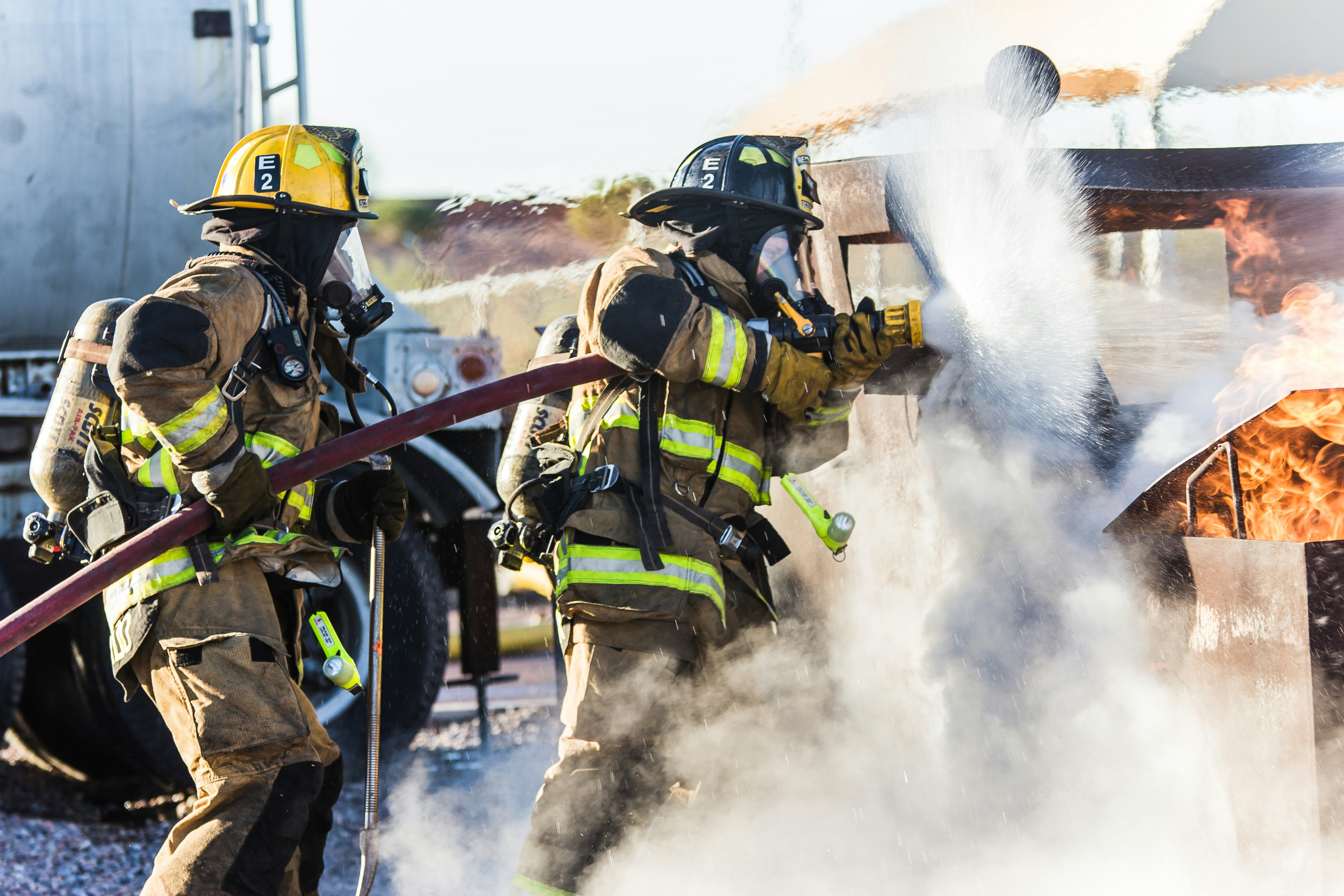
Workplace Fire Injuries in Louisiana: Two Recovery Pathways
Workplace fires injure and kill workers across Louisiana's construction sites, petrochemical facilities, commercial buildings, and industrial operations with devastating regularity. When a worker is injured in a workplace fire, Louisiana's legal framework provides two parallel recovery pathways that are fundamentally different in terms of what they compensate.
Workers' compensation provides the exclusive remedy against the direct employer, covering medical treatment and a percentage of lost wages without compensating pain and suffering, permanent disfigurement, or loss of quality of life. Third-party personal injury claims against every non-employer party whose negligence contributed to the fire provide the pathway to full compensation for everything workers' compensation does not cover.
Why Third-Party Claims Can Be Worth Millions More
Independent contractors, subcontractors, property owners, equipment manufacturers, and chemical suppliers regularly bear independent liability for workplace fires. These third-party claims allow full recovery of the economic and non-economic damages that workers' compensation systematically excludes. The difference in total recovery between workers' compensation alone and a combined workers' comp plus third-party recovery in a serious burn injury case frequently exceeds one million dollars.
Workers' compensation pays a fraction of what a serious burn injury actually costs. Third-party personal injury claims recover the rest — including pain and suffering, permanent disfigurement, and the full lifetime cost of burn care. We identify and pursue every available third-party claim in every workplace fire case we handle.
OSHA citations issued following workplace fire investigations are among the most powerful evidence of employer and contractor negligence. They demonstrate that an official federal regulatory agency found specific violations of specific safety standards that exist to prevent the exact type of harm that occurred.

Workplace Fire Client: Your Legal Action Steps
File Both WC and Third-Party Claims
Workers' comp covers medical bills and partial wages. Third-party personal injury claims recover pain and suffering, disfigurement, and the full economic cost of your burn injuries. File both simultaneously.
Investigate OSHA Violations
OSHA citations issued after a workplace fire are powerful negligence evidence. We obtain every citation, investigation report, and compliance history for every employer and contractor involved.
Identify All Third-Party Defendants
Contractors, subcontractors, property owners, equipment manufacturers, and chemical suppliers may all bear independent liability. We identify every non-employer party whose negligence contributed to the fire.
Retain a Burn Care Life Care Planner
Serious burn injuries require multiple surgeries, years of rehabilitation, and long-term psychological care. A certified life care planner projects every future cost for maximum compensation.
Comprehensive Workplace Fire Injury Representation Throughout Louisiana
Cossé Law Firm represents workplace fire injury clients throughout Louisiana — including workers in the petrochemical corridor, construction sites, maritime and port facilities, and commercial buildings — with immediate third-party liability investigation, OSHA compliance analysis, and aggressive pursuit of every available claim simultaneously.
Free Consultation. No Fees Unless We Win.
Contact us today for a free consultation. No upfront fees. No charges for case costs. No attorney fees unless we win.
Got Questions?
Frequently Asked Questions

Workplace fire injury claims in Louisiana operate at the intersection of workers' compensation law and personal injury law, and navigating this intersection correctly is the single most important step in maximizing the financial recovery available to an injured worker. Louisiana's workers' compensation system provides the exclusive remedy against the direct employer for work-related injuries, meaning an injured worker generally cannot sue their own employer directly for negligence but must pursue compensation through the workers' comp system. However, this exclusivity rule applies only to claims against the direct employer, not to claims against third parties whose independent negligence contributed to the fire.
Third-party personal injury claims are available against independent contractors, subcontractors, property owners, equipment manufacturers, chemical suppliers, and any other non-employer entity whose negligence contributed to the workplace fire. These third-party claims allow full recovery of all economic and non-economic damages including pain and suffering, permanent disfigurement, and loss of quality of life that workers' compensation never compensates. For serious workplace fire injuries — particularly burn injuries requiring multiple surgeries, skin grafting, and long-term rehabilitation — the difference between workers' compensation alone and a combined workers' comp plus third-party recovery can amount to millions of dollars. Our attorneys analyze every workplace fire case immediately for third-party liability opportunities.
OSHA fire safety standards applicable to Louisiana workplaces establish comprehensive minimum requirements for fire prevention, detection, suppression, and emergency egress that employers are legally required to maintain. When OSHA citations are issued following a workplace fire investigation, they create powerful evidence of employer negligence that our attorneys know how to deploy effectively in subsequent personal injury litigation. OSHA's General Duty Clause requires employers to maintain workplaces free from recognized hazards likely to cause serious injury or death — a broadly applicable standard that captures fire hazards not covered by specific regulations.
Specific OSHA fire safety standards applicable to most Louisiana workplaces include 29 CFR 1910.38 requiring emergency action plans documenting evacuation procedures and employee responsibilities, 1910.39 requiring fire prevention plans for workplaces with fire hazards, 1910.157 governing portable fire extinguisher requirements and employee training, 1910.165 governing employee alarm systems, and 1910 Subpart H governing flammable and combustible liquid storage and handling. In Louisiana's petrochemical industry, the OSHA Process Safety Management standard under 29 CFR 1910.119 imposes comprehensive requirements on facilities handling highly hazardous chemicals. Violations of any applicable standard that contributed to the fire or impaired workers' ability to escape create compelling negligence evidence.
Louisiana's chemical corridor along the Mississippi River between New Orleans and Baton Rouge concentrates the highest density of refineries, petrochemical plants, and industrial chemical processing facilities in the United States, making workplace chemical exposure following industrial fires and explosions a recurring source of serious personal injury and toxic tort claims. When an industrial fire or explosion releases toxic chemicals into the workplace or surrounding environment, workers and neighbors may face exposure to hazardous substances including benzene, hydrogen sulfide, sulfur dioxide, chlorine, ammonia, and numerous other industrial chemicals with recognized toxic effects on the respiratory system, nervous system, blood-forming organs, and other body systems.
Establishing a toxic chemical exposure personal injury claim requires proving the identity and quantity of chemicals released, the victim's actual exposure level, and that the exposure at that level caused the claimed medical conditions. Industrial hygienists, toxicologists, and medical experts with specific expertise in occupational and environmental chemical exposure must work together to establish this chain of causation. The latency between chemical exposure and the development of some exposure-related conditions — including certain cancers associated with benzene exposure — can be years to decades, creating complex timing and causation issues that require experienced legal and scientific handling. Our attorneys have experience with Louisiana's industrial chemical exposure claims throughout the petrochemical corridor.
Natural gas leaks and explosions in Louisiana residential and commercial buildings generate personal injury claims under multiple legal theories depending on the source of the defect or negligence that caused the leak. Gas distribution utility companies have a duty to maintain their distribution systems in safe operating condition, conduct regular leak surveys, and respond promptly to leak reports. When a utility company's failure to maintain or repair its distribution infrastructure causes a gas leak that results in an explosion, the utility faces negligence liability for all resulting injuries and property damage. Louisiana's natural gas distribution network, with aging infrastructure in many areas, generates recurring utility negligence claims.
Property owners and landlords who own, control, and maintain gas appliances, gas line connections, and building gas systems bear independent negligence liability when their failure to maintain these systems in safe operating condition causes a gas leak. Contractors who performed gas line work — including installation, repair, or modification of gas systems — face negligence liability when their defective workmanship causes a gas leak that subsequently results in explosion. Appliance manufacturers face strict product liability under Louisiana's LPLA when defective regulators, valves, or burner systems allow gas to accumulate and ignite. Our attorneys retain certified gas explosion investigators and mechanical engineers to identify the precise source and cause of every gas explosion in the cases we handle.
A certified fire investigator is one of the most critical expert witnesses in any Louisiana fire or explosion personal injury case because establishing the origin and cause of a fire is fundamentally a forensic science that requires specialized training, certification, and experience that goes far beyond what attorneys, insurance adjusters, or lay witnesses can provide. Fire investigators certified under the National Fire Protection Association's NFPA 1033 standard undergo rigorous training in fire dynamics, burn pattern analysis, evidence collection, laboratory testing, and the systematic methodology required to reach scientifically defensible conclusions about how a fire started and why it spread.
In the context of personal injury litigation, the fire investigator's origin and cause determination is the foundation on which all liability arguments rest. If the investigator establishes that a fire originated at an electrical panel in a landlord-controlled building area and spread because fire suppression systems were non-functional, that finding directly implicates the property owner's negligence. If the investigator identifies a defective gas appliance as the ignition source, that finding initiates a products liability claim against the manufacturer. If arson is excluded and equipment failure at an industrial facility is identified, that finding implicates the facility operator and potentially OSHA violations.
Our attorneys retain certified fire investigators who work exclusively on behalf of injured plaintiffs and who understand how to present complex forensic findings in clear, compelling terms that Louisiana juries can understand and act upon. We also retain chemical engineers to analyze evidence in industrial and petrochemical fire cases, where the chemistry of industrial processes and the behavior of specific chemicals at high temperatures and pressures requires expert analysis that goes beyond what a standard fire investigator can provide. Thorough expert retention from the earliest possible stage is the cornerstone of every fire and explosion case we handle.
OSHA's fire safety regulations establish minimum standards for workplace fire prevention, detection, suppression, and egress that employers are legally required to implement and maintain. Violations of these regulations are among the most powerful evidence of employer negligence in Louisiana workplace fire injury cases because OSHA citations issued following an incident create a contemporaneous official finding that the employer failed to comply with safety standards that exist specifically to prevent the type of harm that occurred. Our attorneys know precisely how to use OSHA citations and violation histories in personal injury litigation to establish negligence per se and drive maximum recovery.
Common OSHA violations contributing to serious workplace fire and explosion injuries include failure to implement a required fire prevention plan identifying fire hazards and responsible personnel, inadequate training for employees who work with or near flammable and combustible materials, improper storage of flammable liquids in containers or locations that do not meet OSHA standards, failure to maintain fire extinguishers in proper working condition with current inspection documentation, blocked emergency exits and evacuation routes that prevent workers from escaping fires quickly, and failure to implement hot work permit systems that control ignition risks when welding, cutting, or grinding near combustible materials.
In Louisiana's petrochemical industry, OSHA's Process Safety Management standard imposes comprehensive requirements on facilities handling highly hazardous chemicals in quantities above established thresholds. PSM compliance failures — including inadequate process hazard analyses, missing mechanical integrity programs, and inadequate emergency response planning — are a significant contributing cause of major industrial fire and explosion accidents in the Chemical Corridor between New Orleans and Baton Rouge. Our attorneys work with OSHA compliance specialists who can comprehensively audit employer regulatory compliance and identify every violation available to support your claim.
Workers injured in Louisiana workplace fires have important legal options beyond the workers' compensation system, and understanding the distinction between workers' compensation claims and third-party personal injury claims is essential to achieving the fullest possible financial recovery. Workers' compensation provides your employer's primary injury response but comes with significant limitations: it covers medical treatment and a portion of lost wages, but it does not compensate pain and suffering, emotional distress, disfigurement, loss of enjoyment of life, or other non-economic losses. The workers' compensation exclusivity rule generally prevents a direct personal injury lawsuit against your direct employer.
However, Louisiana law allows injured workers to pursue separate personal injury lawsuits against third parties whose negligence contributed to the workplace fire or explosion, completely independent of and in addition to workers' compensation benefits from the direct employer. Third parties who may be liable include independent contractors and subcontractors who performed negligent work on the premises, property owners who maintained unsafe conditions, equipment manufacturers whose defective products caused or contributed to the fire, chemical suppliers who provided improperly labeled or contaminated materials, and engineering firms whose defective design contributed to a process failure.
Third-party personal injury claims allow recovery of the full spectrum of economic and non-economic damages including pain and suffering, emotional distress, and the full value of permanent disability and disfigurement that workers' compensation never compensates. In serious burn injury cases where lifetime costs are extraordinary and non-economic losses are severe, the difference between workers' compensation alone and a combined workers' compensation plus third-party personal injury recovery can amount to millions of dollars. Our attorneys immediately analyze every workplace fire case for third-party liability opportunities and pursue every available claim simultaneously on your behalf.
The prescriptive period for personal injury claims arising from fire and explosion accidents in Louisiana is generally one year from the date of the injury under Civil Code Article 3492, consistent with Louisiana's standard tort prescriptive period. This one-year clock begins running on the date of the fire or explosion, regardless of whether you are still hospitalized, undergoing surgeries, or have not yet fully assessed the long-term consequences of your burn injuries. Missing this one-year deadline permanently bars your personal injury claim with very limited exceptions.
Several circumstances can modify this one-year period. Claims against government entities — including fires caused by government-owned buildings, government utility infrastructure, or government contractor negligence — may require formal written notice of claim within 90 days of the incident under Louisiana's Governmental Claims Act. Missing this notice requirement permanently bars the claim even if the one-year prescriptive period has not expired. Product liability claims under Louisiana's LPLA have their own overlapping deadline structure — one year from injury, with a peremptive period of three years from injury and ten years from the product's initial delivery — that requires separate analysis in cases involving defective appliances, gas systems, or industrial equipment that caused the fire.
Workers' compensation claims arising from workplace fires in Louisiana must be filed within one year of the accident or the last payment of compensation, whichever is later, under Louisiana's Workers' Compensation Act. Third-party personal injury claims arising from the same workplace fire are subject to the standard one-year tort prescriptive period. Because fire injury cases frequently involve multiple overlapping deadlines depending on the identity of the responsible parties, contacting an experienced Louisiana fire injury attorney immediately following any serious fire or explosion is essential to ensuring every applicable deadline is identified and met.
Workplace fire injury claims in Louisiana operate at the intersection of workers' compensation law and personal injury law, and navigating this intersection correctly is the single most important step in maximizing the financial recovery available to an injured worker. Louisiana's workers' compensation system provides the exclusive remedy against the direct employer for work-related injuries, meaning an injured worker generally cannot sue their own employer directly for negligence but must pursue compensation through the workers' comp system. However, this exclusivity rule applies only to claims against the direct employer, not to claims against third parties whose independent negligence contributed to the fire.
Third-party personal injury claims are available against independent contractors, subcontractors, property owners, equipment manufacturers, chemical suppliers, and any other non-employer entity whose negligence contributed to the workplace fire. These third-party claims allow full recovery of all economic and non-economic damages including pain and suffering, permanent disfigurement, and loss of quality of life that workers' compensation never compensates. For serious workplace fire injuries — particularly burn injuries requiring multiple surgeries, skin grafting, and long-term rehabilitation — the difference between workers' compensation alone and a combined workers' comp plus third-party recovery can amount to millions of dollars. Our attorneys analyze every workplace fire case immediately for third-party liability opportunities.
OSHA fire safety standards applicable to Louisiana workplaces establish comprehensive minimum requirements for fire prevention, detection, suppression, and emergency egress that employers are legally required to maintain. When OSHA citations are issued following a workplace fire investigation, they create powerful evidence of employer negligence that our attorneys know how to deploy effectively in subsequent personal injury litigation. OSHA's General Duty Clause requires employers to maintain workplaces free from recognized hazards likely to cause serious injury or death — a broadly applicable standard that captures fire hazards not covered by specific regulations.
Specific OSHA fire safety standards applicable to most Louisiana workplaces include 29 CFR 1910.38 requiring emergency action plans documenting evacuation procedures and employee responsibilities, 1910.39 requiring fire prevention plans for workplaces with fire hazards, 1910.157 governing portable fire extinguisher requirements and employee training, 1910.165 governing employee alarm systems, and 1910 Subpart H governing flammable and combustible liquid storage and handling. In Louisiana's petrochemical industry, the OSHA Process Safety Management standard under 29 CFR 1910.119 imposes comprehensive requirements on facilities handling highly hazardous chemicals. Violations of any applicable standard that contributed to the fire or impaired workers' ability to escape create compelling negligence evidence.
As soon as I walked in the door at Cossé Injury Lawyers, I knew they had my back.
Win your case
Contact a Cossé Attorney to Take Control of Your Case