Louisiana Faulty Medical Device Lawyers | Defective Implant Injury Attorneys
Faulty medical devices fail inside patients’ bodies, causing harm that isn’t discovered for years. We have the biomedical engineering and FDA regulatory expertise to hold manufacturers accountable.
$6M+
Recovered in medical device injury cases
FDA
Regulatory preemption analysis on every case
No Fee
Unless we win your case
Win your case
Contact a Cossee Attorney to Take Control of Your Case
Faulty Medical Device Claims in Louisiana: When FDA Approval Doesn't Mean Safety
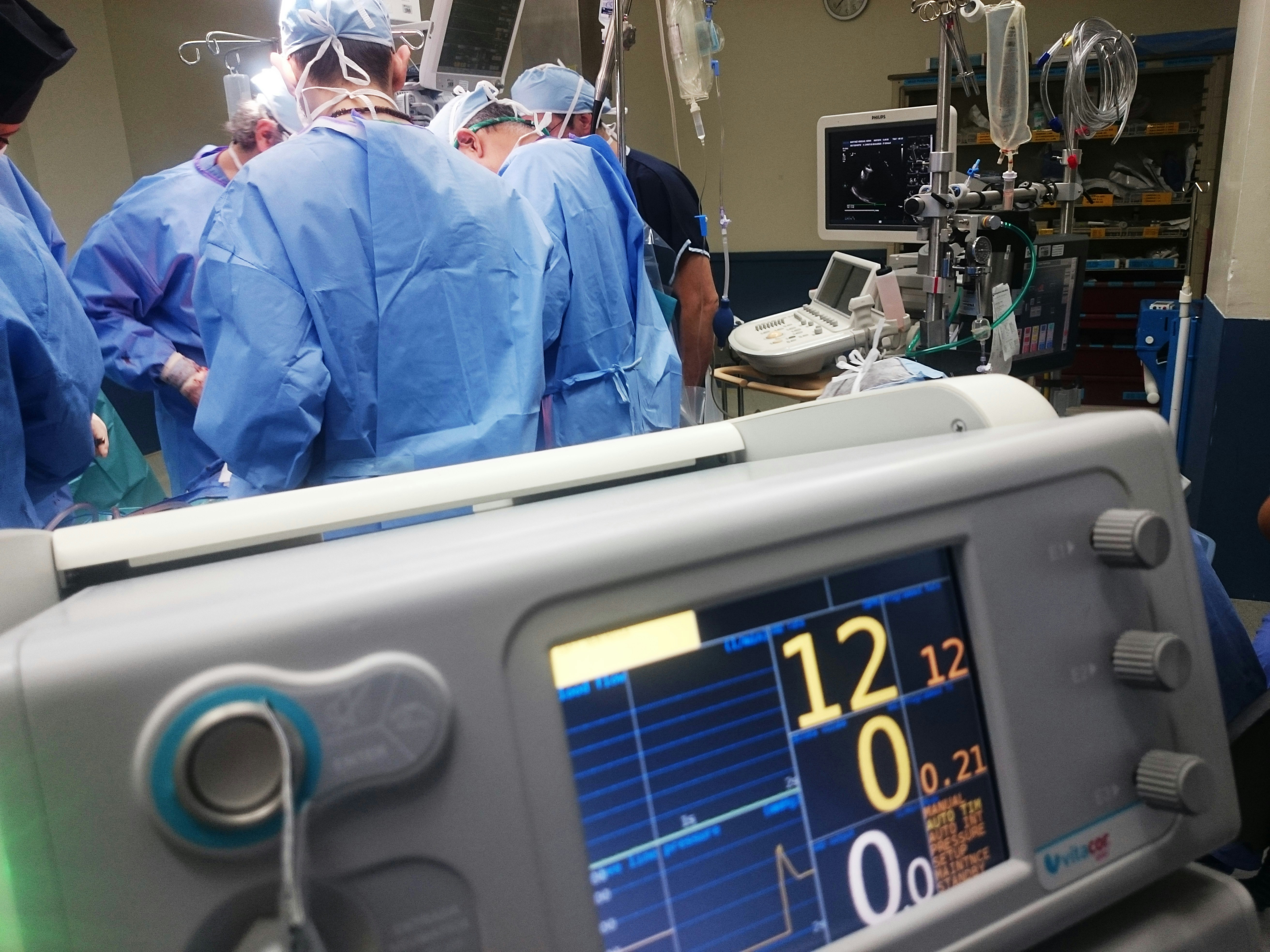
Faulty medical devices cause injury inside patients' bodies in ways that may not be apparent for months or years after implantation. When a hip replacement generates metal debris that progressively destroys surrounding tissue, when a hernia mesh contracts and erodes into adjacent organs, when a spinal implant fails mechanically and requires complex revision surgery, the injury has typically been developing silently for months before the patient or their physician recognizes the device as the source of their worsening symptoms.
Louisiana's LPLA provides strict liability for medical device defects, but the federal regulatory preemption landscape creates significant threshold legal issues. Class III devices that received FDA premarket approval face the strongest federal preemption defenses, while the much more common 510(k) clearance pathway does not preempt state law claims in most circumstances.
MDL vs. Individual Litigation: Choosing the Right Strategy
Multi-district litigation consolidates large numbers of similar device cases in a single federal district court. MDL participation offers access to shared discovery resources, but MDL settlement structures frequently produce inadequate compensation for the most seriously injured plaintiffs whose cases are systematically undervalued in global settlement matrices designed for aggregate efficiency. Individual Louisiana state court litigation frequently produces better outcomes for seriously injured medical device plaintiffs.
Medical device manufacturers will argue that FDA approval insulates them from liability. This argument is wrong in the vast majority of cases. FDA 510(k) clearance — the pathway through which most implanted devices reach the market — does not preempt Louisiana state law claims. We analyze the FDA regulatory history of every device from day one.
Revision surgery documentation is central to medical device defect cases because the revision procedure itself — what the surgeon found, what was removed, and what complications arose — provides the most direct evidence of device failure and its consequences.

Faulty Medical Device: Steps to Protect Your Claim
Get Your Device Records
Obtain all operative notes, device stickers, and manufacturer identification records from your implanting surgeon. The device's manufacturer, model, and lot number are essential to identifying the specific defect.
Understand the FDA Regulatory Pathway
Whether your device received full premarket approval or 510(k) clearance determines the strength of the manufacturer's preemption defense. This is the first legal issue we analyze in every device case.
Document All Revision Surgeries
Every revision surgery to address the failed device — its cause, complications, and outcome — must be fully documented. Revision surgery costs and outcomes are central to both causation and damages.
Evaluate MDL vs. Individual Litigation
Many medical device cases are consolidated in federal MDL proceedings. Individual Louisiana state court litigation often produces better outcomes for seriously injured plaintiffs. We advise each client honestly.
Medical Device Defect Representation Throughout Louisiana
Cossé Law Firm represents faulty medical device clients throughout Louisiana with access to biomedical engineers, orthopedic surgeons, spinal implant specialists, FDA regulatory experts, and the product liability legal expertise needed to overcome federal preemption defenses and achieve maximum compensation. We provide honest, case-specific guidance about individual litigation versus MDL participation.
Free Consultation. No Fees Unless We Win.
Contact us today. No fees unless we win your medical device case.
Got Questions?
Frequently Asked Questions

Medical device litigation in Louisiana under the Products Liability Act involves additional complexity arising from federal regulatory preemption doctrines that manufacturers use to argue that state law failure-to-warn and design defect claims are displaced by FDA approval of the device. For Class III medical devices — the highest risk category including implanted cardiac devices, spinal implants, and certain joint replacement systems — that have received FDA premarket approval (PMA), manufacturers argue that PMA approval expressly preempts state law claims that impose different or additional requirements. Successfully overcoming these preemption arguments requires proving that the manufacturer violated the specific FDA standards to which the device was approved, a theory of claim known as the parallel claim.
For Class II devices and devices that entered the market through the 510(k) clearance process rather than full premarket approval, federal preemption arguments are substantially weaker because 510(k) clearance does not impose device-specific performance requirements. The distinction between premarket approval and 510(k) clearance is one of the most consequential threshold legal issues in any Louisiana medical device case, and it requires thorough understanding of the FDA regulatory pathway through which the specific device at issue entered the market. Our attorneys analyze the federal regulatory history of every medical device involved in our cases to assess preemption risk and develop claim theories that survive preemption challenges.
Hernia mesh product liability litigation involves some of the most scientifically and legally complex issues in contemporary Louisiana personal injury law. Synthetic mesh products — including polypropylene mesh used in inguinal hernia, ventral hernia, and abdominal wall repair procedures — have been associated with a spectrum of serious complications including chronic pain, mesh migration or shrinkage, organ erosion, fistula formation, nerve entrapment, and seroma or abscess formation requiring reoperation. Multiple manufacturers have faced mass tort litigation involving tens of thousands of plaintiffs across the country, with many cases consolidated in federal MDL proceedings.
Louisiana hernia mesh injury plaintiffs have the option of pursuing claims through federal MDL participation, opting out of MDL global settlements in favor of individual litigation, or filing suit directly in Louisiana state court. The choice of forum can significantly affect both the litigation timeline and the ultimate compensation available. Individual Louisiana state court litigation can be advantageous for plaintiffs with serious, well-documented injuries and clear causation evidence, particularly when MDL settlement matrices systematically undervalue severe complications. Our attorneys evaluate every hernia mesh case individually to assess the relative advantages of available litigation paths and provide honest guidance about which approach is most likely to produce the best outcome for each specific client's injury severity and circumstances.
Metal-on-metal hip replacement systems — in which both the femoral head and the acetabular cup are constructed from cobalt-chromium metal alloy — have been associated with serious and distinctive complications that have generated extensive product liability litigation in Louisiana and nationally. The fundamental problem with metal-on-metal designs is tribocorrosion: the microscopic metal particles released as the metal components articulate against each other cause a local inflammatory reaction called adverse local tissue reaction (ALTR) or metal artifact reduction sequence (MARS) that can progressively destroy surrounding soft tissue, muscle, and bone. Elevated blood levels of cobalt and chromium ions can cause systemic toxicity affecting the cardiac system, nervous system, and thyroid gland in severely affected patients.
The clinical consequences of metal-on-metal hip implant failure include severe pain, functional impairment, local tissue necrosis requiring complex revision surgery, and in the most serious cases, permanent disability following failed revision attempts. Revision surgery to remove a failed metal-on-metal hip and replace it with a less reactive bearing surface is substantially more complex and risky than primary hip replacement surgery, with higher complication rates, longer recovery periods, and often inferior functional outcomes compared to the original procedure. Medical device manufacturers who marketed metal-on-metal hips while aware of tribocorrosion risks face significant product liability exposure in Louisiana courts. Our attorneys represent Louisiana patients who suffered metal-on-metal hip failure and pursue every available compensation source.
Pharmaceutical drug injury litigation in Louisiana involves claims against drug manufacturers who failed to adequately warn prescribers and patients about serious known or knowable risks associated with their medications. The learned intermediary doctrine — applied in Louisiana personal injury cases — generally holds that a pharmaceutical manufacturer's duty to warn runs to the prescribing physician rather than directly to the patient, because the physician is presumed to possess the medical knowledge to evaluate and communicate drug risks to patients. Manufacturers who provide adequate warnings to prescribers through package inserts, medical literature, and professional communications generally satisfy their duty to warn under Louisiana law.
However, the learned intermediary doctrine has significant exceptions and limitations that Louisiana courts have recognized. When manufacturers engage in direct-to-consumer advertising for a drug — a practice that became ubiquitous following FDA regulatory changes in the late 1990s — courts have recognized a direct consumer warning duty that bypasses the learned intermediary framework. When manufacturers had post-market safety data documenting serious risks but failed to update package insert warnings or communicate risks to prescribers, failure-to-warn claims can proceed based on the manufacturer's inadequate communication to the learned intermediary. Misrepresentation claims arise when manufacturers actively promoted drugs for off-label uses that increased patient risk without the evidence base supporting approved indications. Our attorneys navigate these complex doctrinal frameworks in every pharmaceutical injury case.
The actions you take in the hours and days following a defective product injury can profoundly affect the strength of your Louisiana product liability claim. The single most important immediate step is to preserve the defective product exactly as it is, without any repair, modification, or disposal. The defective product itself is almost always the most critical piece of physical evidence in a product liability case — it is the tangible proof of the defect that caused your injury, and without it, your claim becomes dramatically more difficult to prove against well-resourced manufacturers and their technical experts.
Preserve the product's original packaging, instruction manuals, warning labels, warranty documentation, and any receipts or purchase records. Photograph the product from every angle before moving it, documenting all visible damage, failure points, and the surrounding scene where the injury occurred. Do not allow anyone to repair or inspect the product until your attorney has had the opportunity to retain your own technical expert to conduct an independent examination. Never send the product back to the manufacturer or retailer in response to a recall or voluntary return request without first consulting an attorney.
Seek immediate medical attention and ensure that your treating physicians document the connection between the defective product and your specific injuries in their medical records. Vague injury descriptions in emergency records weaken causation arguments later in litigation. Collect contact information from any witnesses who observed the product failure or the accident. Contact a Louisiana product liability attorney as soon as possible — our attorneys issue litigation hold letters to manufacturers and distributors immediately upon retaining, legally obligating them to preserve all internal records, testing data, and complaint histories that may be critical to your case.
A product recall is an action taken by a manufacturer, sometimes voluntarily and sometimes at the direction of a federal agency such as the National Highway Traffic Safety Administration, the Consumer Product Safety Commission, or the Food and Drug Administration, to remove a product from commerce and notify consumers of a defect or safety risk. Recalls are initiated when manufacturers or regulators determine that a product presents an unreasonable safety risk under normal conditions of use. Common recall triggers include reports of injuries or deaths associated with the product, identification of a design or manufacturing defect through safety testing, or discovery of a failure-to-warn issue affecting consumer safety.
The existence of a recall affecting the specific product that injured you is very significant evidence in a Louisiana product liability lawsuit. A recall is essentially a public, official acknowledgment by the manufacturer that the product is defective and poses a safety risk — evidence that directly supports your unreasonably dangerous claim under the LPLA. Recall notices and all associated manufacturer communications are discoverable in litigation and often reveal the extent of the manufacturer's prior knowledge of the defect and the timeline of when they knew versus when they acted.
However, a recall is not required for a successful product liability claim in Louisiana. Many seriously defective products that cause injuries have never been formally recalled, particularly when the defect affects a limited production run, when the manufacturer has chosen to conceal the defect, or when not enough injuries have yet been reported to trigger regulatory action. Our attorneys pursue product liability claims aggressively regardless of whether a recall exists, using internal corporate documents, industry safety standards, and expert engineering analysis to establish that the product was unreasonably dangerous under the LPLA's four recognized defect categories.
Yes — you can potentially file a product liability claim in Louisiana for injuries caused by products that are several years old, but Louisiana's unique timing framework for product liability claims under the LPLA makes it essential to consult an attorney immediately regardless of when the injury occurred. The standard one-year prescriptive period runs from the date of the injury or the date you knew or should have known the injury was caused by the product's defect. This prescriptive period is tolled by the discovery rule when the connection between the injury and the product defect was not reasonably apparent at the time of injury.
However, Louisiana's LPLA also imposes a peremptive period — a hard outer deadline that cannot be extended by any legal doctrine — of three years from the date of the injury and ten years from the date the product was first delivered to its initial user or consumer. The ten-year peremptive period means that if a product has been in use for more than ten years at the time of the injury, the claim may be extinguished regardless of when the injury occurred. This outer time limit is significantly shorter than in many other states and must be carefully analyzed in every Louisiana product liability case involving older products.
Medical device cases, pharmaceutical cases, and cases involving products with long useful service lives — including industrial equipment, automotive components, and construction materials — frequently raise complex timing questions that require careful legal analysis of when the prescriptive period began running, whether any tolling doctrines apply, and whether the ten-year peremptive period has expired. Our attorneys analyze the timing framework in every product liability case at the outset to ensure your claim is filed within all applicable deadlines and to identify any timing-based arguments that may affect your case strategy.
Multidistrict litigation is a federal court procedure that consolidates large numbers of similar personal injury cases from across the country into a single federal district court for coordinated pretrial proceedings. MDL is commonly used in major product liability cases involving defective medical devices, dangerous pharmaceutical drugs, and defective consumer products that have injured large numbers of people nationwide. Current and recent MDL proceedings have involved transvaginal mesh, hernia mesh, metal-on-metal hip replacements, talcum powder, opioid manufacturers, and various pharmaceutical drugs with undisclosed serious side effects.
Being part of an MDL offers some advantages, including access to shared discovery of the manufacturer's internal documents and expert witness resources developed by the plaintiffs' leadership committee. However, MDL settlement structures often result in individual claimants receiving compensation that significantly undervalues their specific injuries, particularly for those with the most serious and permanent harm who are lumped into global settlement matrices designed for aggregate efficiency rather than individual justice.
Our attorneys carefully evaluate in every serious product liability case whether the client's interests are best served by remaining in an MDL proceeding, opting out of an MDL settlement to pursue individual litigation, or filing directly in Louisiana state court where the case may be resolved outside the federal MDL system entirely. Individual Louisiana state court litigation frequently produces better outcomes for seriously injured product liability plaintiffs than participation in mass MDL settlements, particularly for clients with catastrophic injuries, significant permanent disability, and high lifetime medical costs that are systematically undervalued in global settlement matrices. We advise every client honestly about the strategic advantages and disadvantages of every available litigation path.
As soon as I walked in the door at Cossé Injury Lawyers, I knew they had my back.
Win your case
Contact a Cossé Attorney to Take Control of Your Case