
Louisiana Truck Driver Negligence Lawyers | 18-Wheeler Accident Attorneys
Fatigued, distracted, and impaired truck drivers cause catastrophic crashes on Louisiana highways. We get the ELD records, black box data, and expert testimony to prove it.
$8M+
Recovered in truck accident cases
Hours
We preserve evidence within hours of retaining
No Fee
Unless we win your case
Win your case
Contact a Cossee Attorney to Take Control of Your Case
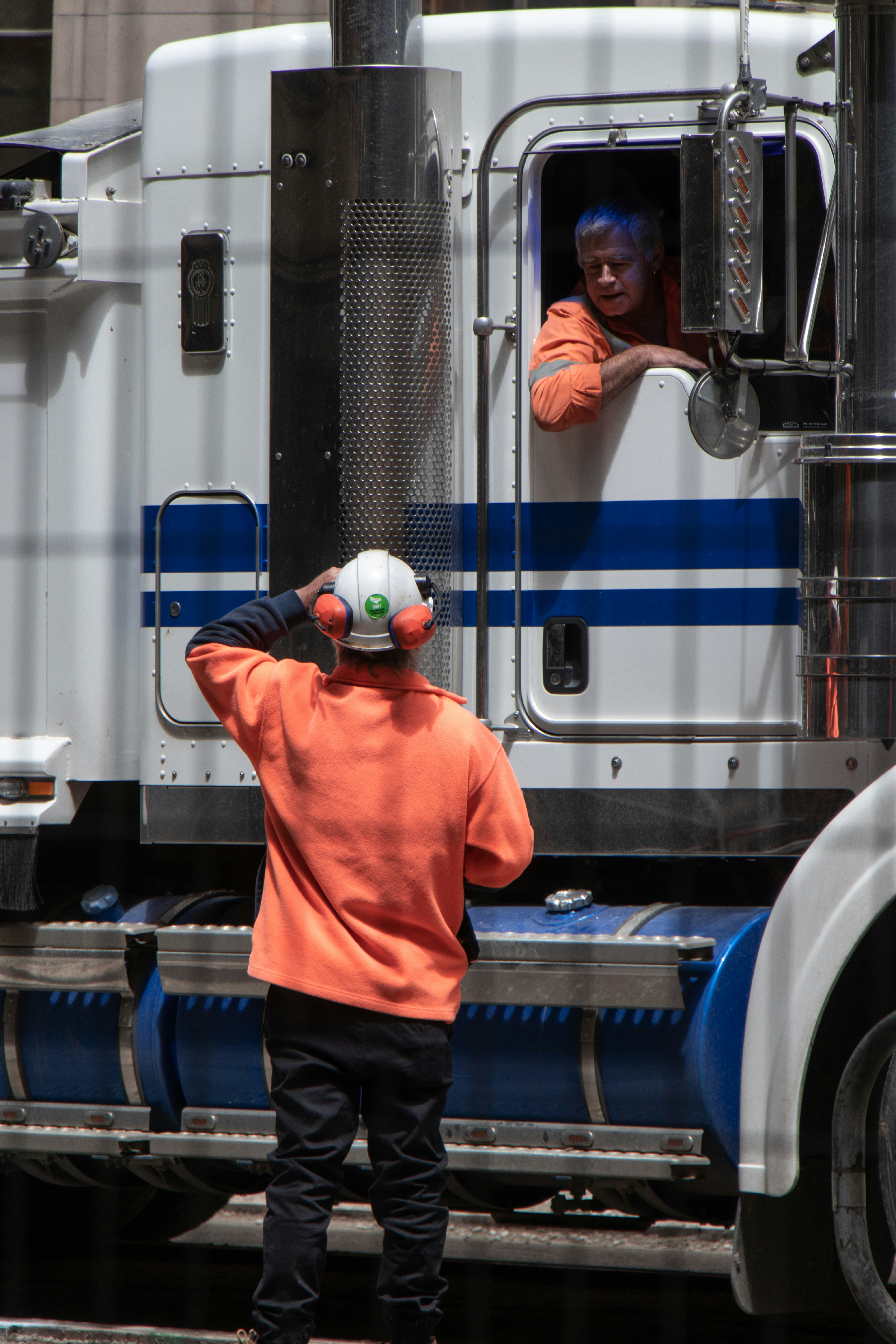
Truck Driver Negligence in Louisiana: Federal Violations That Prove Your Case
Truck driver negligence — fatigued driving in violation of federal hours-of-service limits, distracted driving, impairment, and unsafe lane changes — is the direct cause of most serious 18-wheeler accidents on Louisiana highways. The critical difference between truck driver negligence cases and standard auto cases is the existence of federal FMCSA regulations that, when violated, establish negligence as a matter of law.
Electronic Logging Device records are the most important single piece of evidence in most truck driver negligence cases. ELD data documents the driver's hours of service for the preceding 30 days with second-by-second precision, revealing whether fatigue violations occurred in the hours or days before the crash. This data is automatically overwritten within 30 days in most ELD systems unless a legal preservation demand is served.
Corporate Negligence Beyond the Individual Driver
Drug and alcohol impairment is tested post-accident under FMCSA requirements. Post-accident drug test results must be obtained through proper legal channels within the mandatory testing period and preserved through formal litigation hold demands. Cell phone records document every call, text, and data connection in the window around the crash, often revealing the distracted driving that caused the collision.
The ELD records that prove a truck driver violated federal hours-of-service rules in the hours before your crash are automatically overwritten within 30 days. We serve legal preservation demands within hours of being retained. Every day you wait without an attorney is a day closer to losing this critical evidence.
Beyond the individual driver, our attorneys simultaneously investigate the trucking company's negligent hiring, inadequate training, and systemic pressure on drivers to violate hours-of-service rules to meet delivery schedules.

Protecting Your Rights After a Truck Accident in Louisiana
Preserve ELD Records Immediately
Hours-of-service ELD records are overwritten within 30 days. We serve legal preservation demands within hours of retaining to protect this critical evidence.
Secure Post-Accident Drug Tests
FMCSA requires post-accident drug and alcohol testing of commercial drivers. These results must be obtained promptly through proper legal channels — we handle this immediately.
Get the Driver's Qualification File
The driver's application, license history, prior accidents, and drug test records reveal whether negligent hiring contributed to your crash. We obtain this file in every truck case.
Sue Both Driver and Company
The driver bears direct liability. The trucking company bears vicarious and potentially direct negligence liability. Pursuing both maximizes the total insurance coverage available for your claim.
Immediate Response Truck Accident Representation in Louisiana
Truck driver negligence cases require immediate, aggressive legal action to preserve the critical electronic evidence that disappears within days. Cossé Law Firm handles 18-wheeler accident cases throughout Louisiana with around-the-clock availability, immediate evidence preservation demands, and the comprehensive expert network needed to prove both driver negligence and corporate liability.
Contact Us Immediately. No Fees Unless We Win.
Every hour matters in truck accident cases. No upfront fees. No charges for litigation costs. No attorney fees unless we win your case.
Got Questions?
Frequently Asked Questions

Truck driver negligence encompasses a broad range of unsafe behaviors and regulatory violations that constitute the most common direct causes of 18-wheeler accidents in Louisiana. Drowsy driving caused by hours-of-service violations is the leading cause of serious truck crashes nationally — federal FMCSA regulations limit driving time specifically because fatigued truck drivers are statistically as impaired as intoxicated drivers. When ELD records reveal that a driver exceeded permissible driving hours before a crash, those records constitute powerful evidence of negligence per se that significantly strengthens a victim's claim.
Distracted driving — including cell phone use, in-cab GPS interaction, and eating or drinking while operating an 80,000-pound vehicle — creates catastrophic risks on Louisiana highways. Drug and alcohol impairment, while subject to post-accident testing requirements under FMCSA regulations, remains a contributor to a meaningful percentage of serious commercial vehicle crashes. Improper lane changes and failure to check blind spots before merging represent another category of driver negligence that frequently causes crushing side-impact crashes with passenger vehicles. Speeding in excess of posted limits or safe conditions for the vehicle's load contributes to both the frequency and severity of truck crashes throughout Louisiana's highway network. Our attorneys thoroughly investigate every aspect of truck driver conduct in every case we handle.
Establishing truck driver negligence in a Louisiana personal injury case requires a systematic evidence-gathering approach that begins immediately after the crash and continues through the litigation. Electronic Logging Device records documenting the driver's hours of service for the preceding 30 days are the single most important evidence source for proving hours-of-service violations — these records are automatically maintained in tamper-resistant electronic format and must be requested immediately before the FMCSA's minimum 6-month retention period expires. Post-accident drug and alcohol testing results required by FMCSA regulations must be obtained from the testing laboratory through proper legal channels.
The driver's cell phone records, obtained through subpoena to the carrier, can establish whether the driver was using their phone at or near the time of the crash. Black box ECM data records the driver's speed, braking, throttle, and engine activity in the seconds before impact. Dash cam footage from the truck cab may capture the driver's behavior in the moments leading to the collision. The driver's qualification file — containing the driver's application, license history, prior employment verifications, drug test history, and medical certifications — must be obtained early in litigation to identify any disqualifying history that establishes negligent hiring alongside direct driver negligence. Our attorneys secure all of this evidence through immediate preservation demands in every truck accident case.
Under federal FMCSA hours-of-service regulations, property-carrying commercial truck drivers are permitted to drive a maximum of 11 hours within a 14-hour window that begins when they go on duty. After reaching the maximum, drivers must rest for a minimum of 10 consecutive hours before returning to driving. Drivers are also limited to 60 or 70 hours of on-duty time in any 7 or 8 consecutive days respectively, with mandatory restart provisions. Passenger-carrying drivers have separate, more restrictive limits. These limits exist because research demonstrates that commercial vehicle driver fatigue is a leading cause of serious crashes.
When ELD records reveal that a truck driver exceeded any of these limits in the hours or days before a crash, that violation establishes negligence per se — meaning the violation itself constitutes negligence as a matter of law without requiring additional proof of careless driving behavior. A driver who had been behind the wheel for 13 consecutive hours before a fatal crash has violated the regulations so clearly that the legal argument for negligence is dramatically simplified. Trucking companies that systematically pressure drivers to violate hours-of-service regulations to meet delivery schedules — a common practice that ELD records, dispatch communications, and former driver testimony can document — face direct negligence liability for the crashes that result from their fatigue-inducing demands.
Yes — and pursuing both the driver and the trucking company simultaneously is the standard approach in every 18-wheeler accident case, for compelling financial and legal reasons. The trucking company faces vicarious liability under respondeat superior for the driver's negligent acts committed within the scope of employment, making the company automatically liable for the same conduct that makes the driver liable. More importantly, pursuing the trucking company directly — rather than only the individual driver — provides access to the company's substantially larger insurance coverage, assets, and potentially multiple insurance policy layers that dramatically expand the compensation available for seriously injured victims.
Individual truck drivers typically have minimal personal assets beyond the company vehicle they were operating and perhaps a personal vehicle and home. Even if a negligent driver bears full legal liability for a crash, their personal financial resources are often inadequate to fully compensate catastrophic injuries. The trucking company's liability insurance — required by federal law to be at least $750,000 for most freight operations, with many carriers carrying $1 million to $5 million — provides the real financial resources necessary to compensate serious injuries. Additionally, direct negligence claims against the trucking company for negligent hiring, training, supervision, and maintenance create independent liability theories that can support punitive damages when the company's conduct rises to the level of conscious disregard for safety.
If you are involved in an 18-wheeler accident in Louisiana, the actions you take in the immediate aftermath can significantly affect both your physical recovery and the strength of your subsequent personal injury claim. Call 911 immediately regardless of how serious the crash appears — commercial truck accidents frequently cause internal injuries that are not immediately apparent and that require emergency evaluation. Ensure Louisiana State Police or parish law enforcement respond to the scene and prepare an official crash report, which is required for all commercial vehicle accidents and becomes critical evidence in your case.
If you are physically able, photograph the scene extensively before any vehicles are moved. Capture all vehicle positions, damage patterns, road conditions, skid marks, cargo spills, traffic signs and signals, and the trucking company's name and DOT number visible on the truck. Collect contact information from every eyewitness present. Do not speak with the trucking company's insurance representatives, risk management personnel, or attorneys who may arrive at the scene — they are working against your interests from the moment of the crash and anything you say will be used to minimize your claim.
Contact an experienced Louisiana truck accident attorney as soon as physically possible after receiving medical care. Trucking companies and their insurers activate rapid response protocols within hours of a serious crash, deploying investigators and attorneys to preserve evidence favorable to their defense and begin building their case against you. The critical electronic evidence in every truck accident case — black box data, ELD records, and dash cam footage — can be lost within days if preservation letters are not served immediately. Our attorneys respond to truck accident calls around the clock and deploy investigators immediately upon retaining every case.
Yes — in Louisiana 18-wheeler accident cases, you can and should pursue direct legal claims against the trucking company in addition to claims against the individual driver, and doing so is essential to accessing the full compensation available for your injuries. The trucking company faces liability on two separate legal theories simultaneously. Under respondeat superior — the principle of vicarious liability — the trucking company is automatically liable for the negligent acts of its employee drivers committed within the course and scope of their employment, meaning the company is liable for the crash simply because their driver caused it while doing their job.
Beyond vicarious liability, trucking companies face independent direct negligence claims for their own corporate conduct. If the company hired a driver with a disqualifying safety violation history that a reasonable background check would have revealed, they face negligent hiring liability. If the company failed to provide adequate training for the specific vehicle type, cargo, or operating conditions, they face negligent training liability. If the company pressured drivers to violate hours-of-service regulations or falsify logbooks to meet delivery deadlines, they face negligent supervision and entrustment liability. If required vehicle safety inspections were skipped or documented defects were left unrepaired, they face negligent maintenance liability.
Pursuing direct negligence claims against the trucking company is often more financially significant than the respondeat superior claim alone because direct negligence creates the strongest foundation for punitive damage claims when the company's conduct demonstrates conscious disregard for the safety of other road users. Our attorneys build comprehensive direct negligence cases against every trucking company defendant using driver qualification files, training records, dispatch communications, and FMCSA compliance histories.
Trucking companies and their specialized defense insurers employ sophisticated, systematic strategies to minimize or eliminate liability after serious crashes, and understanding these tactics is essential to effectively countering them. The most common and most damaging tactic is rapid deployment of the company's own investigators, attorneys, and risk management personnel to the crash scene within hours — before injured victims have any legal representation. These professionals document the scene from the defendant's perspective, interview surviving drivers and witnesses, and begin building a liability narrative that serves the company's interests.
Trucking companies frequently attempt to shift blame onto injured victims through comparative fault arguments, arguing that the victim was speeding, following too closely, making an illegal lane change, or distracted at the time of the crash. In Louisiana's pure comparative fault system, every percentage point of fault successfully attributed to the victim directly reduces the company's payment obligation. Insurance adjusters extend early settlement offers to injured victims before they have legal representation and before the full extent of their injuries is known, buying closure at a fraction of fair value.
Spoliation of evidence is a serious concern in truck accident cases. While federal regulations require trucking companies to preserve accident-related evidence, companies sometimes destroy dash cam footage, allow black box data to be overwritten, and fail to preserve maintenance records that might reveal known defects. Our attorneys issue aggressive, comprehensive evidence preservation demands within hours of being retained, placing trucking companies on immediate legal notice that destruction of any evidence will result in spoliation sanctions in the subsequent litigation. Prompt legal representation is the most effective counter to every trucking company liability avoidance strategy.
Negligent entrustment is a direct negligence doctrine that holds trucking companies independently liable when they provide a commercial vehicle to a driver they knew or should have known was unfit, unqualified, or dangerous to operate the vehicle. Unlike respondeat superior vicarious liability — which attaches automatically when an employee driver causes an accident in the course of employment — negligent entrustment is a separate theory of direct corporate liability that can support significantly higher damages, including punitive damages, when the company's decision to entrust a dangerous driver with an 80,000-pound vehicle demonstrates conscious disregard for public safety.
Common examples of negligent entrustment in Louisiana truck accident cases include hiring a driver with a history of serious traffic violations, prior DUI convictions, or prior at-fault truck accidents that a reasonable pre-employment background check would have revealed; continuing to entrust a vehicle to a driver after receiving reports of unsafe driving behavior; allowing a driver to operate a vehicle requiring a specialized endorsement the driver does not hold; and entrusting a vehicle to a driver who is visibly fatigued or whose ELD records show active hours-of-service violations at the time of assignment.
Establishing negligent entrustment requires thorough investigation of the company's hiring and qualification verification processes, including obtaining the driver's complete application, background check results, motor vehicle record history, prior employment verifications, drug and alcohol test results, and all communications between the company and driver. Our attorneys conduct comprehensive driver and company background investigations in every truck accident case, identifying negligent entrustment claims that significantly enhance the total damages available and create additional legal theories to pursue maximum compensation for our clients.
As soon as I walked in the door at Cossé Injury Lawyers, I knew they had my back.
Win your case
Contact a Cossé Attorney to Take Control of Your Case